
Trades
Access global markets through copy trading, equities, and foreign exchange — with the tools and research to trade them well.
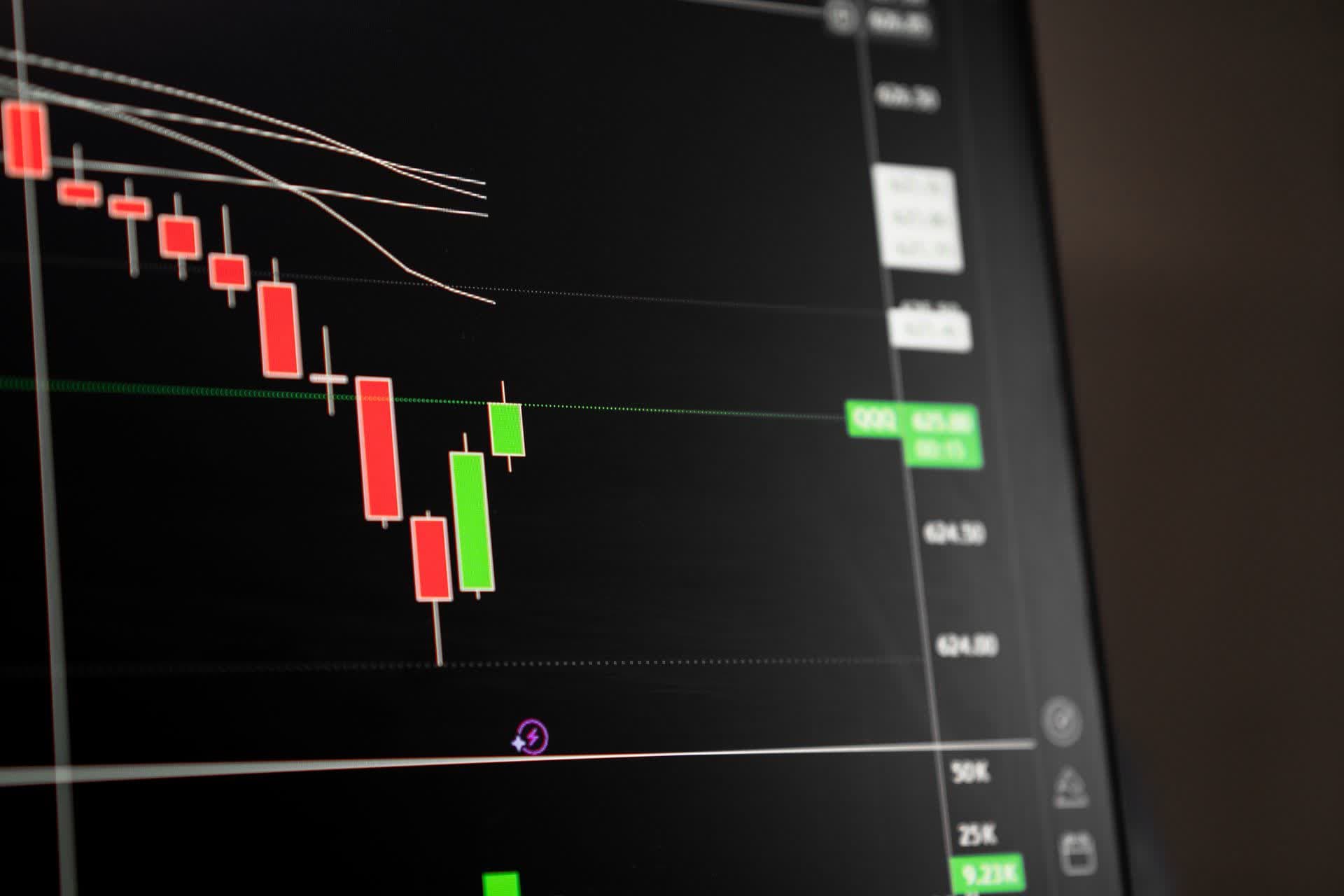
Forex
Forex, short for foreign exchange, is the decentralized global market where currencies are traded. It's the largest and most liquid financial market in the world, with an average daily trading volume exceeding trillions of dollars. Here's an overview of Forex trading:
Unlike a stock exchange, the currency market has no single building or matching engine at its centre. It is a network of banks, brokers, and electronic venues that quote prices to one another, and the rates you see are the result of that competition rather than a figure set by any one authority. This is what makes the market large and continuous, and also what makes it heterogeneous: the price and the execution you get depend on where your order is routed and how much liquidity is present at that moment.
The market exists first for a practical reason. Businesses that trade across borders, investors who buy assets in another currency, and travellers all need to exchange one currency for another. Speculation sits on top of that underlying demand. The distinction matters when reading market commentary, because flows that arise from real trade and investment behave differently from positions taken purely to profit from a price move.
Market Participants
Forex trading involves a variety of participants, including central banks, commercial banks, hedge funds, corporations, and individual traders. The main purpose of Forex trading is to facilitate international trade and investment by allowing businesses to convert one currency into another.
Currency Pairs
In Forex trading, currencies are traded in pairs, with one currency being exchanged for another. Each currency pair consists of a base currency and a quote currency. For example, in the EUR/USD pair, the euro is the base currency, and the US dollar is the quote currency. The exchange rate indicates how much of the quote currency is needed to purchase one unit of the base currency.
Leverage
Forex trading often involves the use of leverage, which allows traders to control larger positions with a relatively small amount of capital. While leverage can amplify profits, it also increases the potential for losses, so it should be used cautiously.
Market Hours
Unlike stock markets, which have specific trading hours, the Forex market operates 24 hours a day, five days a week, due to its global nature. Trading begins in Asia, moves to Europe, and then to North America. This continuous trading cycle allows traders to react to news and events around the world in real-time.
Trading Strategies
- Day Trading: Opening and closing positions within the same trading day to take advantage of intraday price movements.
- Swing Trading: Holding positions for several days or weeks to capitalize on medium-term price swings.
- Scalping: Making multiple trades throughout the day to exploit small price movements.
- Trend Following: Trading in the direction of the prevailing market trend.
- Range Trading: Buying and selling currencies within a defined price range.
Risk Management
Risk management is crucial in Forex trading due to the high volatility of currency markets. Traders use techniques such as setting stop-loss orders, position sizing, and diversification to manage risk effectively.
Regulation
Forex trading is regulated in most countries to ensure fair and transparent trading practices. Regulatory authorities such as the Commodity Futures Trading Commission (CFTC) in the United States and the Financial Conduct Authority (FCA) in the UK oversee Forex brokers and enforce compliance with industry standards.
Trading sessions
A market that runs continuously is still shaped by the working day of each financial centre. Activity concentrates where the local business hours overlap, and the character of trading changes as responsibility passes from one centre to the next. The four sessions below are the ones most often named, in the order the trading week reaches them.
The overlaps are the part worth understanding. When two major centres are both active, more participants are quoting at the same time, which generally means deeper liquidity and narrower spreads than during the quieter hours between sessions. The reverse is also true: the stretch when only one centre is open can be thin, and prices can move further on less flow.
| Session | Centre | What characterises it |
|---|---|---|
| Sydney | Opens the trading week for the major centres. | The first session after the weekend. Activity is lighter than in London or New York, so price moves can be more pronounced on the same amount of order flow. |
| Tokyo | The main session in Asia. | Reacts first to news from Japan and the wider region, and carries much of the trading in the yen and the Asian currency pairs. |
| London | The largest of the four centres for currency trading. | Overlaps the close of Asia and the open of New York. The two overlap periods concentrate the greatest volume of the day. |
| New York | The main session in North America. | Shares the busiest stretch of the day with London and covers the release of United States economic data, which can move the dollar across every pair. |
Major pairs
Currencies are quoted in pairs, and the pairs that combine the most widely traded currencies are known as the majors. The US dollar appears on one side of most of them, which is why the dollar's own direction tends to set the tone across the market. Pairs that do not include the dollar, such as EUR/GBP or EUR/JPY, are called crosses; they are usually quoted and traded through the dollar rather than directly.
| Pair | Base / quote | What the pair reflects |
|---|---|---|
| EUR/USD | Euro / US dollar | The most actively traded pair, and the one most often used to express a view on the euro area against the United States. |
| USD/JPY | US dollar / Japanese yen | A dollar pair widely watched as a gauge of risk appetite and of interest-rate expectations. |
| GBP/USD | British pound / US dollar | Known in the market as cable. It reflects the pound against the dollar and reacts to news from both economies. |
| USD/CHF | US dollar / Swiss franc | The franc has long been treated as a defensive currency, so the pair can move on risk sentiment as much as on either economy. |
| AUD/USD | Australian dollar / US dollar | The Australian dollar is linked to commodity demand and to the economic cycle in Asia, which gives the pair a different driver from the European majors. |
| USD/CAD | US dollar / Canadian dollar | Closely tied to the price of oil and to trade with the United States, so it often responds to commodity news. |
| NZD/USD | New Zealand dollar / US dollar | A smaller, commodity-linked currency that tends to move alongside the Australian dollar. |
What moves an exchange rate
Trend following and range trading both depend on understanding what makes a currency move in the first place. The drivers below are the ones most commonly cited. None of them acts alone, and none of them points to a direction on its own.
Interest rates are usually the first influence. Capital tends to move toward where it expects to be rewarded, so a change in policy rates, or in the expectation of one, can shift demand between currencies. The effect is rarely mechanical, because what matters is not only the decision but how far it was already anticipated. A rate rise that everyone expected can leave a currency unmoved or weaker.
Inflation shapes the same channel from the other side. Persistent inflation erodes a currency's purchasing power at home and pushes central banks to respond, so inflation data is watched closely for what it implies about future policy. Trade and investment flows add a slower, structural pressure: a country that imports more than it exports must buy foreign currency to settle the difference, and long-term investment across borders moves capital in the same way.
Stability and sentiment form the last group. Political uncertainty tends to weigh on the currency it concerns, while currencies seen as defensive can attract flows when markets are stressed. Risk sentiment changes the behaviour of the commodity-linked currencies most of all, because they are tied to the global economic cycle. Every one of these drivers interacts with the others, and the same piece of news can strengthen a currency in one context and weaken it in another.
Where to go next
Currency trading sits alongside the other ways to take a view on markets, and each has its own mechanics. The stock page covers the exchange-traded world, where ownership of a company is bought and sold during set market hours. The markets overview sets out the instruments and asset classes available so you can see how currencies fit beside them.